Syria
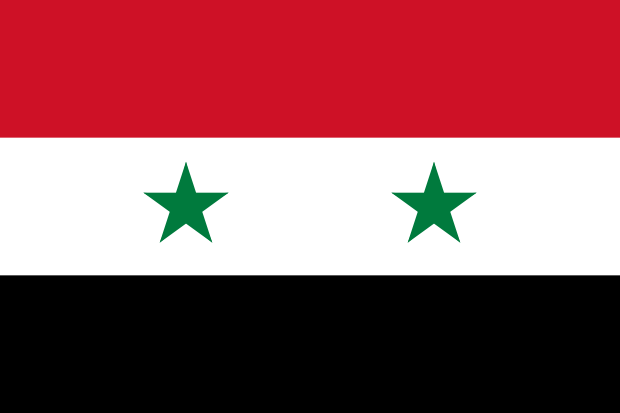
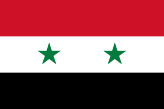
Country flag available in this resolutions
| Icon 32x21 |  |
| Icon 88x59 |  |
Syria
Syria, officially the Syrian Arab Republic, is a country located in Western Asia, bordering the Mediterranean Sea to the west, Turkey to the north, Iraq to the east, Jordan to the south, and Lebanon and Israel to the southwest. Its strategic location has made it a crossroads of civilizations and a theater for countless historical events, shaping its rich and complex identity. The countrys diverse geography, ranging from fertile plains along the Mediterranean coast to arid desert regions in the east, has influenced its development and the livelihoods of its people for millennia. From ancient empires to modern conflicts, Syrias story is one of resilience, cultural fusion, and enduring struggles for sovereignty and identity.
Demographics
The demographic landscape of Syria is as varied as its geography, characterized by a mix of ethnic and religious groups that have coexisted for centuries, though often with underlying tensions. The majority of the population identifies as Arab, speaking Arabic as their primary language. However, significant minority groups contribute to the nations rich tapestry. The Kurds, primarily concentrated in the northern and northeastern regions, form the largest ethnic minority, with their own distinct language and cultural traditions. Other notable minorities include Assyrians, Armenians, Circassians, and Turkmen. Religiously, Syria is predominantly Muslim, with the majority being Sunni Muslims. However, a substantial Shia Muslim population, particularly Alawites, holds significant influence, especially in government and military structures. Christians also constitute a significant minority, with various denominations present, including Orthodox, Catholic, and Protestant communities. Historically, these religious communities have lived side-by-side, contributing to Syrias reputation as a diverse and tolerant society. However, the ongoing civil war has exacerbated sectarian divisions and led to significant displacement and emigration of minority groups, profoundly altering the demographic makeup of the country. The pre-war population was estimated to be around 22 million, but the ongoing conflict has resulted in millions of refugees and internally displaced persons, making precise current demographic figures difficult to ascertain. The war has also had a devastating impact on birth rates and life expectancy, further complicating demographic projections.
Economy
Syrias economy, prior to the devastating civil war that began in 2011, was largely based on agriculture, industry, and oil. Agriculture has historically been a cornerstone of the Syrian economy, with fertile lands in the west supporting the cultivation of wheat, barley, cotton, olives, and fruits. Irrigation projects, particularly those along the Euphrates River, played a crucial role in boosting agricultural output. The industrial sector, though less developed than in some neighboring countries, included textiles, food processing, cement, and phosphate mining. Oil and gas were significant sources of revenue, with Syria being a modest producer. However, the countrys oil reserves were not as vast as those of some Gulf states. The economy was also characterized by a significant informal sector and a degree of state control over key industries. The imposition of international sanctions, coupled with the destruction of infrastructure and the disruption of trade routes caused by the conflict, has had a catastrophic impact on the Syrian economy. GDP has plummeted, unemployment has soared, and inflation has reached hyperinflationary levels. Basic services have collapsed in many areas, and the country faces a severe humanitarian crisis, with widespread poverty and food insecurity. Reconstruction efforts are hampered by ongoing instability, lack of funding, and the complex political situation. The future of the Syrian economy remains deeply uncertain, dependent on a resolution to the conflict and substantial international aid.
Geography
Syrias geography is marked by a striking diversity of landscapes, influencing its climate, resources, and historical development. The western part of the country is dominated by a narrow coastal plain along the Mediterranean Sea, characterized by a Mediterranean climate with hot, dry summers and mild, wet winters. This fertile strip has historically been the most densely populated and agriculturally productive region. Inland, the country rises to a rugged mountain range, the Anti-Lebanon Mountains, which form a natural border with Lebanon. To the east of the mountains lies a vast arid and semi-arid plateau, which gradually transitions into the Syrian Desert, stretching towards the Iraqi border. This eastern region is characterized by extreme temperatures and sparse vegetation, with oases providing vital water sources. The Euphrates River, the longest river in Western Asia, flows through eastern Syria, forming a vital artery for irrigation and supporting agricultural settlements. Other significant rivers include the Orontes and the Tigris, which forms part of the northeastern border. The countrys geological features also include volcanic formations and fertile river valleys, such as the Ghouta near Damascus. The diverse geography has historically facilitated trade routes connecting the Mediterranean coast with Mesopotamia and the Arabian Peninsula, contributing to Syrias role as a cultural and economic hub. The climate varies significantly, from the mild, humid coastal regions to the scorching heat of the desert. This geographical diversity has shaped the distribution of population, agricultural practices, and the strategic importance of different regions throughout history.
History
Syrias history is an epic saga spanning millennia, marked by the rise and fall of numerous empires and civilizations. It is considered one of the cradles of civilization, with evidence of human settlement dating back to prehistoric times. The region was home to ancient Semitic peoples and was part of the vast Mesopotamian civilizations, including the Akkadian, Babylonian, and Assyrian empires. Later, it came under the influence of the Hittites and Egyptians. The arrival of the Arameans in the early first millennium BCE led to the establishment of powerful kingdoms, including Damascus, which became a major trading center. Syria was conquered by the Neo-Assyrian Empire, followed by the Neo-Babylonian and Persian empires. The Hellenistic period began with Alexander the Greats conquest in the 4th century BCE, leading to the establishment of the Seleucid Empire, with Antioch as its capital. Roman rule followed, bringing significant infrastructure development and integrating Syria into the Roman Empire. Christianity flourished in Syria, and major theological centers emerged. The arrival of Islam in the 7th century CE marked a pivotal turning point, with Syria becoming a core territory of the early Islamic caliphates, including the Umayyad Caliphate, whose capital was Damascus. The Abbasid, Fatimid, Seljuk, and Ayyubid dynasties all held sway over Syria, each leaving their architectural and cultural imprint. The Crusades saw European knights establish kingdoms in the Levant, leading to centuries of conflict with Muslim rulers. The Mamluk Sultanate then controlled the region until the Ottoman conquest in the early 16th century. Ottoman rule lasted for over four centuries, during which Syria experienced periods of prosperity and decline. In the aftermath of World War I, Syria came under French mandate rule. Following independence in 1946, Syria experienced a period of political instability, marked by coups and shifting alliances. The Baath Party rose to prominence in the 1960s, leading to a period of authoritarian rule under Hafez al-Assad, who governed from 1970 until his death in 2000. His son, Bashar al-Assad, succeeded him and has been in power ever since. The Arab Spring uprisings in 2010 led to widespread protests against the Assad regime, escalating into a devastating civil war in 2011 that has had profound regional and global implications, causing immense human suffering and reshaping the geopolitical landscape of the Middle East.
Information about country Syria
Automated text translation, excuse errors, please!
Informations are from the publication CIA The World Factbook.
Country Syria is situated in a location / continent Middle East. Syria has an area of 185 180 km2 and 22 530 746 residents. The highest point has a height 2 814 above sea level. and it is called Mount Hermon. The lowest point is located at the level of -200 above sea level and it is named unnamed location near Lake Tiberias. System of government is republic and the date of independence 17th April 1946. The capital city is Damascus. Syria has the international abbreviation SY.
Syria - economy
Total gross domestic product (GDP) is 107 600 000 000 $. Total gross domestic product per capita in purchasing power parity is 5 100 $. GDP grows by -2.00 % a year. Inflation (consumer price index) is equal to 4.80 % a year. Syria have 5 642 000 working-age population (from a total population 22 530 746 people). Unemployment is at 12.30 %. Syria issued 2.90 % GDP to healt care and 5,90 % GDP to army. The public debt of the country is 35.20 % GDP. The total amount of foreign debt is 7 074 000 000 USD.
Syria - transport and telecommunications
Syria has 68 157 km of roads, 2 052 km of railway lines and 99 airports. The total length of waterways (navigable rivers, canals, etc.) is 900 km. There is registered 19 ships.
Number of active mobile phones (sim card) in the country Syria is 13 117 000. Number of active fixed telephone lines is 4 345 000. Syria has 4 469 000 internet users, who have the available 420 Internet connections. Syria has been assigned a domain first Choose range .sy.
Syria - demography
As suggested above, Syria has 22 530 746 people. Population growth is in the amount -0.80 % per year. Number of children born per 1000 population per year is 23.52.Every mother has average 2.85 children. The infant mortality rate is 15.12 and maternal mortality 70.00 deaths per 100,000 births. Average estimated life expectancy makes 74.92 years. Mortality is 3.67 people per 1000 population per year.
Syria - energetics
Syria consumes a year 28 870 000 000 kWh of electricity. Annual electricity production is 40 860 000 000 kWh in power plants with a total installed electrical capacity 8 200 000 kW. Syria exports 0 kWh and imports 0 kWh of electricity per year Energy mix of power generation is as follows: fossil fuels: 84.8 %, nuclear energy: 0 %, renewable: 0.0 %, hydropower: 15.2 %. The country Syria is harvested annually 333 900 barrels of oil.
Dále doporučujeme:
Zajímavé linky na nejrůznější webyOdkazy na zajímavé weby
Partnerské internetové stránky
Tipy na zajímavé weby
Linky na partnerské weby
Countries and flags
Flags
World countries flags
 |
 |
 |
 |
 |
 |
 |
 |
 |
 |
 |
 |
 |
 |
 |
 |
 |
 |