Switzerland
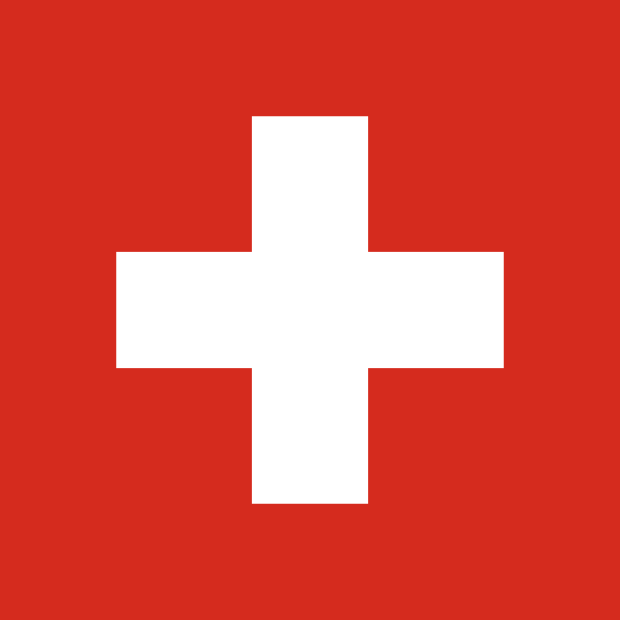
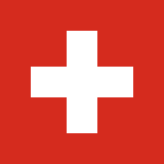
Country flag available in this resolutions
| Icon 32x32 |  |
| Icon 88x88 |  |
Switzerland
Switzerland, officially the Swiss Confederation, is a landlocked country situated in the western, central, and southern regions of Europe. It is renowned for its breathtaking alpine scenery, its neutrality, and its thriving economy. The countrys unique political structure, a federal republic composed of 26 cantons, each with a high degree of autonomy, has been a cornerstone of its stability and prosperity for centuries. This federal system, coupled with a tradition of direct democracy through referendums and popular initiatives, empowers citizens and fosters a strong sense of national identity, despite the countrys linguistic and cultural diversity. Switzerlands commitment to neutrality, formally recognized in 1815, has allowed it to navigate complex international relations and serve as a hub for diplomacy and international organizations.
The geography of Switzerland is dominated by the Alps, which cover approximately 60% of the countrys territory. These majestic mountains, including iconic peaks like the Matterhorn and the Eiger, shape the landscape, influence the climate, and are a major draw for tourism. The Jura Mountains form the northwestern border, and the Swiss Plateau, a fertile and densely populated region, lies between the two mountain ranges. This plateau is home to the majority of Switzerlands cities, including its largest, Zurich, and the capital, Bern. The country boasts numerous pristine lakes, such as Lake Geneva, Lake Zurich, and Lake Lucerne, which are vital for recreation, water supply, and hydroelectric power generation. Switzerlands rivers, including the Rhine, Aare, and Rhone, are also crucial for transportation and energy production, flowing into major European river systems. The diverse topography presents both challenges and opportunities, influencing everything from agriculture to infrastructure development.
Demographically, Switzerland is a nation of approximately 8.7 million people, characterized by a high standard of living and a relatively old population. The country is multilingual, with four national languages: German, French, Italian, and Romansh. German is spoken by the majority, particularly in the northern and central regions, while French is prevalent in the west, and Italian in the south. Romansh, an ancient Romance language, is spoken by a small minority in the canton of Graubünden. This linguistic diversity is a defining characteristic of Swiss identity and is reflected in its education system and cultural institutions. Switzerland also has a significant foreign-born population, contributing to its multicultural fabric. The countrys population density is highest on the Swiss Plateau, with urban areas experiencing greater concentration. Life expectancy is among the highest in the world, and the birth rate is relatively low, contributing to an aging demographic.
The economy of Switzerland is one of the most stable, prosperous, and competitive in the world. It is characterized by a highly skilled workforce, low unemployment rates, and a strong emphasis on innovation and research and development. Key sectors include finance and banking, pharmaceuticals, machinery and electronics, watches, and tourism. Switzerland is a global leader in wealth management and has a reputation for discretion and stability in its financial services. The pharmaceutical industry is a powerhouse, with major companies conducting extensive research and development. The precision engineering and watchmaking industries have a long and storied history, synonymous with quality and craftsmanship. Tourism, driven by the stunning natural beauty of the Alps and its well-preserved historical sites, is a significant contributor to the economy, attracting visitors from around the globe. Despite its small size, Switzerland is a major player in international trade, with a highly diversified export base. The countrys commitment to free trade agreements and its strategic location in the heart of Europe further bolster its economic strength.
Historically, Switzerlands journey to its current form was a long and often tumultuous one. The foundation of the Swiss Confederacy is traditionally traced back to 1291, when the three cantons of Uri, Schwyz, and Unterwalden formed an alliance against external threats, notably the Habsburgs. This early confederation, initially a loose pact for mutual defense, gradually expanded over the centuries, incorporating new cantons and forging a distinct identity. The Reformation in the 16th century brought religious divisions, leading to internal conflicts but also solidifying a sense of communal identity within individual cantons. The Napoleonic era saw significant upheaval, with Switzerland briefly becoming a satellite state of France. The Congress of Vienna in 1815, however, recognized Switzerlands perpetual neutrality, a status that has been instrumental in its peaceful development and its role as a sanctuary for refugees and a center for international diplomacy. The Federal Constitution of 1848 established Switzerland as a modern federal state, laying the groundwork for its current political system and national institutions. The 20th century saw Switzerland maintain its neutrality through two World Wars, though it faced economic challenges and had to navigate complex geopolitical pressures. Post-war, Switzerland experienced significant economic growth and further solidified its position as a global financial and humanitarian center. The countrys history is a testament to its resilience, its ability to forge unity amidst diversity, and its enduring commitment to peace and prosperity.
Information about country Switzerland
Automated text translation, excuse errors, please!
Informations are from the publication CIA The World Factbook.
Country Switzerland is situated in a location / continent Europe. Switzerland has an area of 41 277 km2 and 7 925 517 residents. The highest point has a height 4 634 above sea level. and it is called Dufourspitze. The lowest point is located at the level of 195 above sea level and it is named Lake Maggiore. System of government is Federal Republic and the date of independence First August 1291. The capital city is Bern. Switzerland has the international abbreviation SZ.
Switzerland - economy
Total gross domestic product (GDP) is 344 200 000 000 $. Total gross domestic product per capita in purchasing power parity is 43 900 $. GDP grows by 1.90 % a year. Inflation (consumer price index) is equal to 0.20 % a year. Switzerland have 4 898 000 working-age population (from a total population 7 925 517 people). Unemployment is at 3.10 %. Switzerland issued 11.30 % GDP to healt care and 1,00 % GDP to army. The public debt of the country is 52.40 % GDP. The total amount of foreign debt is 1 346 000 000 000 USD.
Switzerland - transport and telecommunications
Switzerland has 71 454 km of roads, 4 876 km of railway lines and 64 airports. The total length of waterways (navigable rivers, canals, etc.) is 1 292 km. There is registered 38 ships.
Number of active mobile phones (sim card) in the country Switzerland is 10 017 000. Number of active fixed telephone lines is 4 684 000. Switzerland has 6 152 000 internet users, who have the available 5 249 000 Internet connections. Switzerland has been assigned a domain first Choose range .ch.
Switzerland - demography
As suggested above, Switzerland has 7 925 517 people. Population growth is in the amount 0.20 % per year. Number of children born per 1000 population per year is 9.51.Every mother has average 1.53 children. The infant mortality rate is 4.03 and maternal mortality 8.00 deaths per 100,000 births. Average estimated life expectancy makes 81.17 years. Mortality is 8.80 people per 1000 population per year.
Switzerland - energetics
Switzerland consumes a year 57 700 000 000 kWh of electricity. Annual electricity production is 63 980 000 000 kWh in power plants with a total installed electrical capacity 19 540 000 kW. Switzerland exports 32 880 000 000 kWh and imports 33 400 000 000 kWh of electricity per year Energy mix of power generation is as follows: fossil fuels: 2.5 %, nuclear energy: 16.6 %, renewable: 2.5 %, hydropower: 69.2 %.
Dále doporučujeme:
Naše tipy na užitečné webyDoporučené internetové odkazy
Zajímavé internetové odkazy
Odkazy na zajímavé weby
Linky na partnerské weby
Countries and flags
Flags
World countries flags
 |
 |
 |
 |
 |
 |
 |
 |
 |
 |
 |
 |
 |
 |
 |
 |
 |
 |